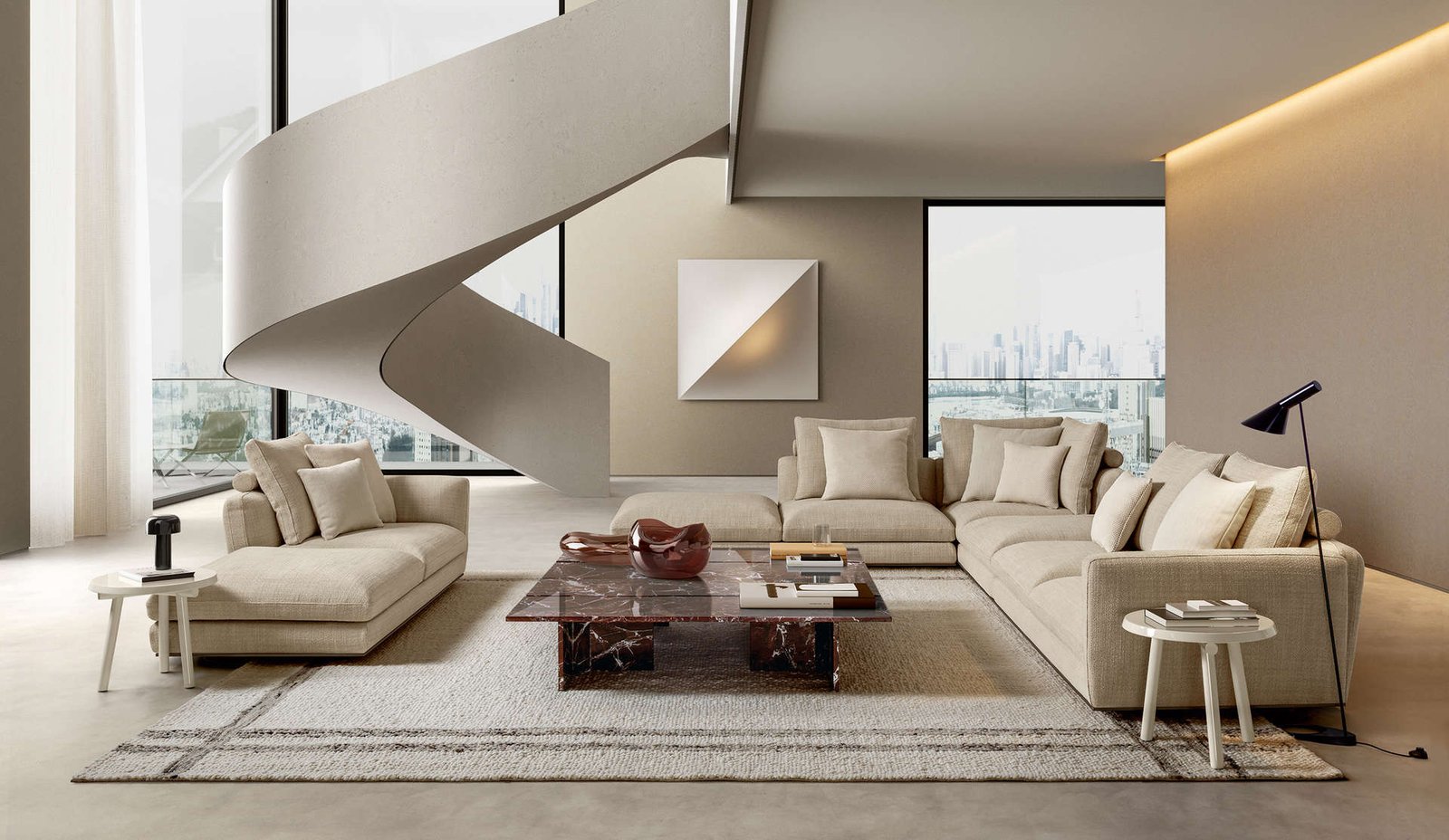
Two Very Different Kinds of “Italian”
Broadly, Italian furniture entering the Indian market falls into two categories, and understanding the difference is the single most useful thing a buyer can know before spending on imported luxury furniture.
Licensing brands. These are names, often instantly recognisable, attached to products manufactured under licence, sometimes far from where the brand’s design heritage originated. You are paying, in large part, for the name on the piece rather than for verified in-house craftsmanship.
Artisan-led corporates. These are companies that evolved organically from genuine master craftsmanship into larger-scale manufacturing, without losing the workshop-level attention to detail that built their reputation in the first place. Brands like Poliform and Rugiano sit in this category, businesses that scaled their production without hollowing out their craft.
The price difference between the two is not always obvious at first glance. The difference in what you are actually receiving is significant.
Why This Matters More With Import Costs Involved
Once you factor in duties, freight, and logistics, the premium on any imported furniture piece grows substantially before it ever reaches your home. That premium is only justified when it is buying genuine craftsmanship, material quality, and manufacturing integrity, not simply a recognisable name.
This is where Poliform Rugiano India sourcing decisions tend to separate informed buyers from ones who will overpay for the wrong reasons. Both brands represent the artisan-led model: Italian manufacturing built on design lineage and material expertise, scaled responsibly rather than diluted for volume. Paying import costs on furniture like this buys something durable, both physically and in terms of design relevance a decade from now.
What to Actually Evaluate Before Importing
A few questions are worth asking of any Italian furniture brand before committing to the cost of importing it:
Who actually manufactures it, and where? A brand’s country of origin and its actual manufacturing location are not always the same thing.
What is the material story? Genuine artisan-led brands can usually explain, in detail, where their materials come from and how they are finished. Licensing brands often cannot, because the manufacturing sits several steps removed from the name on the product.
What happens after it arrives? Import logistics, customs clearance, and installation are frequently underestimated costs. A piece that is beautifully made but poorly installed loses much of its value immediately.
Does the design language suit the space, or just the brand’s marketing? Italian design has enormous range, from minimalist to sculptural to classical. The right brand for a project is the one whose design language actually fits the room, not the one with the most recognisable name.
The Honest Verdict
Not all Italian furniture is worth its import cost, and not all of it needs to be imported at all. Some pieces are genuinely irreplaceable in terms of craftsmanship and material sourcing. Others are simply a name with a shipping fee attached.
The distinction is rarely obvious from a catalogue or a showroom floor. It comes from understanding manufacturing lineage, material sourcing, and design intent well enough to know which brands are actually earning their premium, and which are simply charging for one.